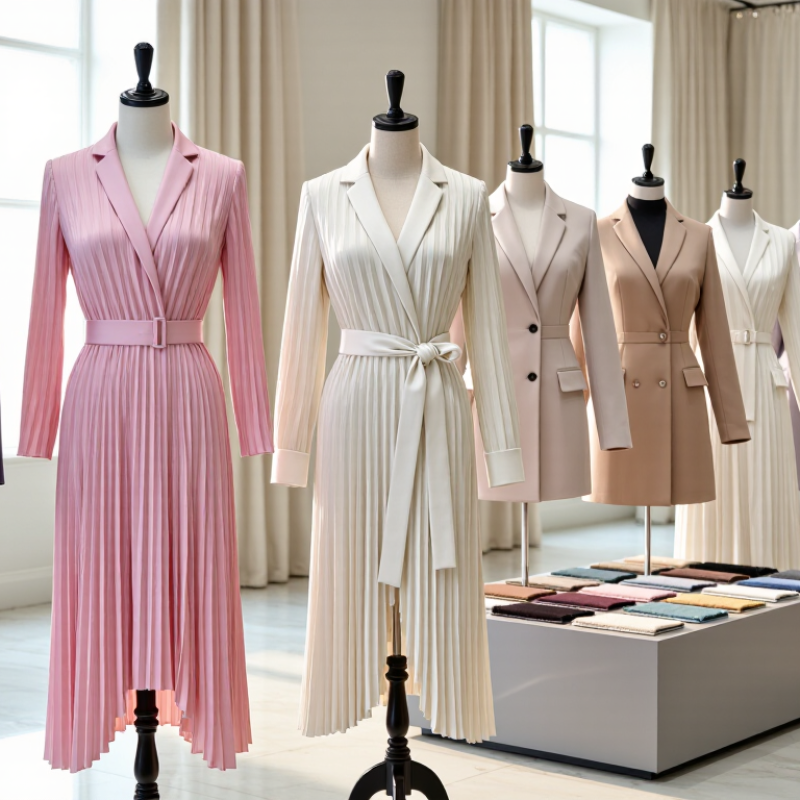
Choosing the right Pleated Suit Dress in 2026 requires more than following seasonal fashion forecasts. Global buyers must consider fabric performance, construction quality, fit consistency, and customer expectations across different markets. A sharp silhouette may attract attention, but poor pleat recovery can quickly damage a product’s reputation.
This guide examines the best types of Pleated Suit Dress for wholesale buyers, retailers, and fashion brands. It compares structured blazer dresses, soft accordion-pleat styles, belted designs, and lightweight travel-friendly options. Each type offers a different balance of elegance, comfort, production cost, and merchandising potential. Details matter. A clean lapel, even pleats, secure lining, and smooth zipper can strongly influence perceived value.
Practical buying experience also shows that appearance alone is not enough. Sample garments should be checked after sitting, folding, steaming, and gentle washing. Color accuracy can vary between screens and finished fabric. Sizing may also differ between regions. No guide can remove every sourcing risk. Mistakes still happen, especially when buyers trust photographs more than physical samples. That is why reliable suppliers, clear specifications, and consistent quality inspections remain essential. This overview aims to help global buyers make informed decisions while recognizing that the ideal style depends on climate, customer profile, retail positioning, and delivery requirements. Trends change quickly. Wearability lasts longer.
A pleated suit dress combines tailored suiting with the movement of a pleated skirt. It usually has a structured shoulder line, shaped waist, and a folded lower panel. The result feels polished but less rigid than a traditional suit. Pleats may run vertically, fan from the waist, or appear only on the side panels. Their direction changes the dress’s visual balance.
The upper section often uses a jacket-inspired construction. It may include notched lapels, a single-breasted front, welt pockets, or light shoulder padding. The lower section needs enough ease for walking and sitting. Accurate seam matching is important, especially where pleats meet the waistline. In garment inspections, uneven pleat spacing is a common quality concern. It can make an otherwise refined dress look careless.
Fabric choice affects both appearance and performance. Polyester blends hold sharp folds well, while wool blends offer a softer, more breathable hand. A lining can improve comfort and prevent the pleats from catching on hosiery. Buyers should check recovery after pressing, colorfastness, seam strength, and size measurements. Care labels also need clear washing and ironing guidance for different markets. One detail is often underestimated: pleats may relax during shipping. They are not always permanent. A sample test after packing and unpacking can reveal problems before bulk production.
2026 Best Types of Pleated Suit Dress for Global Buyers
Main Types of Pleated Suit Dresses for Different Buyer Needs
Pleated suit dresses serve different wardrobes, climates, and purchasing goals. Office buyers often choose tailored midi styles with knife pleats. These dresses create movement without looking overly casual. A structured shoulder and covered buttons support a professional appearance. In real fittings, waist placement matters more than dramatic pleat volume. Small errors can make the torso look shorter.
For event retailers, satin-blend pleated suit dresses offer soft shine and fluid movement. Lightweight pleats work well for weddings, dinners, and evening receptions. Buyers should inspect seam stability near the waist and sleeve attachment. Poor construction may cause pleats to open after sitting. That problem is easy to miss in product photos. It is not a minor detail.
Modest-fashion buyers may prefer long-sleeve styles with higher necklines and below-knee hems. Breathable woven fabrics help in warmer regions. For colder markets, lined designs with deeper pleats provide better coverage and comfort. Plus-size collections need more than larger measurements. They require thoughtful grading around the bust, waist, and hips. Petite buyers may need shorter hems and narrower shoulder proportions. Two-piece pleated suit dresses can also support flexible retail pricing and easier size exchanges. However, extra pieces increase packing checks and inventory work. That trade-off deserves honest review.
2026 Best Types of Pleated Suit Dress for Global Buyers
Pleated suit dresses combine tailored structure with graceful movement. For global buyers, fabric selection should match climate, shipping needs, and customer expectations. Lightweight wool blends suit cooler offices and hold sharp pleats well. Polyester blends resist wrinkles during long transport. Viscose feels softer, but it may need stronger finishing to prevent shape loss.
Choose the pleat design according to the dress silhouette. Knife pleats create a clean, professional line. Box pleats offer more room around the hips. Soft accordion pleats give movement to midi and wrap-style dresses. Test the sample while walking and sitting. A beautiful pleat can still pull awkwardly across the waist.
Suiting details decide whether the garment feels dependable. Check shoulder balance, lining smoothness, button strength, and seam density. A narrow lapel looks modern, while a wider lapel gives stronger tailoring. I have learned that small measurement errors become obvious after production. A perfect sample is not enough. Fabric judgment can also be imperfect, especially under different lighting.
Tips: Request fabric swatches before ordering. Measure pleat recovery after pressing. Confirm sleeve length, waist placement, and hem width. Ask for care instructions and colorfastness results. Keep a fitting record for every size. Conservative choices often sell better, but not always. Local customer feedback should challenge the first design decision.
| Suit Dress Type | Best Use | Recommended Fabric Options | Suitable Pleat Design | Key Suiting Details | Comfort & Performance | Care Profile | Buyer Selection Notes |
|---|---|---|---|---|---|---|---|
| Tailored Knife-Pleat Blazer Dress | Officewear, business events, formal day-to-evening dressing | Wool-polyester blend Poly-viscose twill Stretch suiting | Sharp, evenly spaced knife pleats placed at the skirt panel or back vent area | Notched lapel, single-breasted front, waist darts, two-piece sleeve, structured shoulder, partial lining |
★★★★★ Good shape retention and polished appearance; elastane content can improve movement |
Usually dry clean or gentle professional cleaning; test pleat recovery after pressing | Choose medium-weight fabric with adequate recovery to prevent lapel collapse and pleat flattening |
| Double-Breasted Accordion-Pleat Dress | Statement occasionwear, winter business styling, premium retail collections | Wool blend Polyester crepe Heavy recycled polyester | Accordion pleats with consistent depth and controlled flare from the waist | Peak lapel, double-breasted buttons, wide waistband, firm interfacing, sleeve vents, full lining |
★★★★☆ Strong visual structure and warmth; heavier construction may reduce breathability |
Professional cleaning is preferred; avoid high heat that can distort synthetic pleats | Confirm button overlap, front balance, and pleat expansion when the garment is closed |
| Lightweight Wrap Suit Dress with Sunray Pleats | Spring and summer workwear, travel collections, resort-to-office dressing | Polyester crepe Viscose blend Lightweight wool blend | Sunray pleats radiating from a side seam or waist point | Wrap closure, shaped collar, waist tie or internal button, lightweight shoulder support, clean-finished edges |
★★★★☆ Flexible fit and fluid movement; thin fabrics may require lining to control transparency |
Follow fiber-specific care instructions; use low-temperature steaming and store on a shaped hanger | Check wrap security, neckline coverage, and pleat alignment when walking or sitting |
| Belted Utility Pleated Blazer Dress | Contemporary casualwear, travel, uniforms, smart-casual merchandising | Cotton-polyester twill Polyamide blend Stretch cotton | Box pleats or inverted box pleats at the front, back, or utility pockets | Patch pockets, detachable belt, metal-look snaps, reinforced seams, practical sleeve tabs, medium shoulder structure |
★★★★☆ Durable and functional; cotton-rich options improve comfort but may crease more easily |
Machine washable options are possible; verify colorfastness, shrinkage, and hardware performance | Prioritize seam strength, pocket placement, belt durability, and wash-test results for volume programs |
| Pleated Tuxedo Suit Dress | Evening events, cocktail dressing, formal celebrations | Wool blend Polyester satin Crepe-back satin | Narrow knife pleats, side pleats, or controlled pleated peplum details | Satin peak lapel, covered buttons, waist suppression, clean shoulder line, optional chest piece, full lining |
★★★☆☆ Elegant appearance; satin surfaces can show pressure marks and require careful handling |
Professional cleaning recommended; protect satin areas from abrasion and excessive heat | Inspect lapel shine, seam puckering, lining compatibility, and color consistency under flash lighting |
| Minimalist Collarless Pleated Suit Dress | Modern officewear, capsule wardrobes, understated premium collections | Poly-viscose blend Wool-polyester blend Double-knit suiting | Flat pleats, inverted pleats, or small pressed pleats integrated into the side panel | Collarless neckline, concealed placket, bound seams, slim shoulder pads, hidden pockets, simple belt or no belt |
★★★★★ Clean silhouette and easy layering; fabric must resist bagging at elbows and waist |
Low-maintenance options are available; avoid over-pressing visible pleat edges | Best for buyers seeking versatile styles with lower trim complexity and efficient production |
| Pleated Peplum Suit Dress | Occasionwear, feminine tailoring, fashion-forward seasonal drops | Stretch crepe Polyester georgette Viscose twill | Knife pleats or soft accordion pleats concentrated around the waist and peplum hem | Contoured waist seam, shaped peplum, concealed zipper, fitted sleeve, fusible support, optional belt |
★★★★☆ Creates waist definition and movement; requires accurate grading across sizes |
Gentle cleaning recommended; test pleat return after repeated sitting and packing | Review waist-to-hip measurements, hem balance, and side-seam matching across the size range |
| Travel-Friendly Packable Pleated Suit Dress | Business travel, resort retail, commuter wardrobes, easy-care programs | Wrinkle-resistant polyester Polyamide-elastane Lightweight stretch suiting | Permanent knife pleats, engineered pleats, or low-bulk side pleats | Soft construction, minimal padding, concealed closure, low-profile pockets, compact lining, flexible waistband |
★★★★★ Lightweight, quick-drying, and resilient; synthetic fibers may retain heat in humid climates |
Usually easy-care; verify pilling resistance, static behavior, and heat sensitivity | Request packed-garment testing, recovery testing, and colorfastness testing before bulk approval |
| Plus-Size Structured Pleated Suit Dress | Inclusive workwear, formal retail, extended-size collections | Stretch poly-viscose Wool blend with elastane Stable ponte suiting | Vertical knife pleats, controlled front pleats, or back pleats that avoid unwanted volume | Extended size grading, supportive lining, reinforced waist, balanced armhole, secure closure, functional pockets |
★★★★☆ Comfort depends on stretch recovery, airflow, and well-balanced pattern engineering |
Follow fabric care instructions; inspect seam stress and pleat recovery after wear testing | Approve on a complete size set rather than a single sample; check sitting, arm movement, and closure comfort |
| Modular Two-Way Pleated Suit Dress | Collection building, convertible styling, multi-use wardrobe concepts | Medium-weight crepe Stretch gabardine Poly-viscose suiting | Removable pleated overskirt, adjustable pleated panel, or reversible pleat placement | Detachable belt or panel, hidden snaps, secure zippers, compatible lining, reinforced attachment points |
★★★★☆ Offers multiple styling options; additional components increase weight and quality-control needs |
Component-specific care may be required; test attachment points after repeated use | Confirm interchangeability, spare-component availability, packaging efficiency, and clear consumer instructions |
2026 Best Types of Pleated Suit Dress for Global Buyers
A pleated suit dress combines tailored structure with a softer, moving skirt. Knife pleats create a clean office silhouette. Accordion pleats offer more movement for travel and long working days. Box pleats suit buyers seeking a sharper, architectural shape. Fabric weight matters. Lightweight woven fabric feels cooler in warm climates, while a lined medium-weight blend performs better in colder regions. Avoid relying on photos alone. Pleats can change the visual balance of a garment.
Tips: Measure bust, waist, shoulder, and back length before ordering. Compare these measurements with the supplier’s size chart. A slightly relaxed waist often improves comfort across different body shapes. Check whether the pleats open fully when sitting. They should not pull across the hips. Short sentence. Test movement.
Global buyers should assess seasonal use carefully. Breathable fabrics and partial linings work well for humid summers. Full linings and denser materials provide better comfort during colder months. However, heavy fabric may feel restrictive in warm offices. Sleeve length also affects versatility. Three-quarter sleeves can support transitional seasons, but they may not suit every market preference. Tailoring standards differ by region, so fit samples are valuable before bulk purchasing. Even experienced buyers can misjudge ease allowance. That is worth reviewing. Waist placement, hem length, and pleat recovery should be checked after washing and repeated wear.
Fabric weight is a practical indicator for comparing comfort and seasonal suitability across international markets. Lighter fabrics support warm climates, while heavier wool options provide structure and insulation.
Use bust, waist, and hip measurements instead of country size labels. A practical ease allowance is approximately 4–8 cm for semi-fitted tailoring and 8–14 cm for relaxed comfort.
Pleats improve movement, but lining, waistband pressure, sleeve mobility, and fabric breathability should also be checked during product development.
Lightweight linen blends and cotton are suitable for warm seasons, tropical wool and crepe offer balanced versatility, and wool flannel is better suited to cool-season markets.
Reference basis: typical commercial apparel fabric-weight bands measured in grams per square metre (g/m²). Actual comfort also depends on fiber content, weave, lining, garment construction, and local climate.
For global buyers, a pleated suit dress must balance appearance, performance, and documentation. Textile Exchange’s Materials Market Report 2024 recorded 124 million tonnes of global fiber production in 2023. Polyester represented about 59 percent. This matters because fabric choice affects pleat retention, breathability, recycling claims, and cost. During sampling, check pleat alignment, seam strength, lining comfort, colorfastness, and shrinkage after washing. A sharp sample can still fail after production.
Customization should begin with a clear technical pack. Specify pleat depth, waist tolerance, hem length, button material, grading rules, and acceptable defects. Small changes can alter sewing time. They can also change the landed price. Request a pre-production sample and a measured inspection report. Third-party testing should confirm fiber content, colorfastness, restricted substances, and durability. Requirements differ by destination, so country-specific labeling and chemical compliance must be reviewed before shipment. The OECD Due Diligence Guidance for Responsible Supply Chains highlights traceability and risk-based supplier checks, not paperwork alone.
Tips: Compare total landed cost, not only factory price. Include testing, packaging, duties, transport, alterations, and possible rework. Textile Exchange projects global fiber production may reach 160 million tonnes by 2030. That pressure makes material transparency more valuable. Recycled content is useful, but it is not automatically better. Ask for valid certificates and chain-of-custody evidence. One imperfect point remains: the cheapest dress may deliver the highest cost when pleats collapse, labels fail, or returns increase.