Leave Your Message

How to Choose Pleated Cuffed Pants for Wholesale Buying?

Choosing Pleated Cuffed Pants for wholesale buying requires more than following seasonal colors. Buyers must evaluate demand, construction, fit, and supplier reliability together. The State of Fashion 2025 report by The Business of Fashion and McKinsey & Company describes a cautious market, with consumers becoming more value-conscious and selective. That shift matters. A stylish trouser with weak fabric recovery may create returns, markdowns, and frustrated retail partners.

Pleats should open cleanly without pulling across the hips. Cuffs should hold their shape after washing. Inspect the waistband, pocket depth, seam density, and zipper movement on physical samples. A practical test includes sitting, walking, and bending in the garment. Small details reveal larger problems. Buyers should also compare fabric composition, shrinkage results, colorfastness, and size grading before approving bulk production. Circana’s apparel market research consistently shows that fit and comfort influence purchasing decisions, especially when shoppers compare similar products online and in stores. However, wholesale teams sometimes overestimate fashion appeal and underestimate return risk. That mistake deserves attention.

The 2024 Retail Returns Report from the National Retail Federation and Happy Returns estimated that U.S. retail returns represented 16.9% of annual sales. The figure covers multiple categories, not trousers alone, but it highlights the cost of inconsistent sizing and unclear product expectations. A reliable Pleated Cuffed Pants program should therefore include measurement charts, pre-production samples, inspection records, and transparent lead-time commitments. Suppliers with documented quality procedures offer stronger evidence than attractive catalog images. Buyers should review supplier experience, certification claims, and customer references carefully. Price still matters, but dependable construction protects margin better than the lowest quote.
How to Choose Pleated Cuffed Pants for Wholesale Buying?

Define the Key Features of Pleated Cuffed Pants

How to Choose Pleated Cuffed Pants for Wholesale Buying?

Define the Key Features of Pleated Cuffed Pants

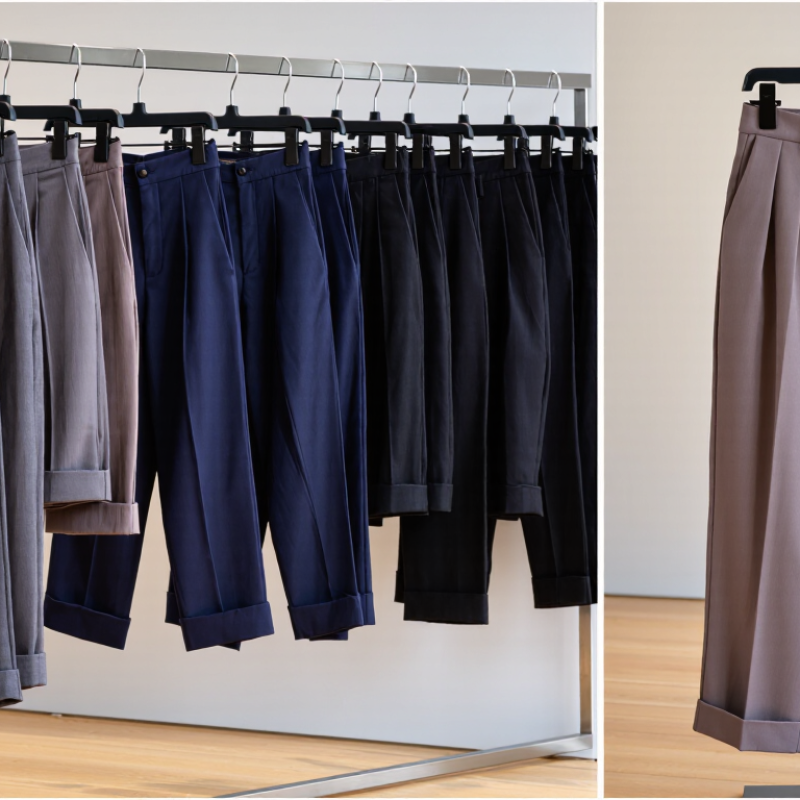
Pleated cuffed pants combine front pleats, a shaped waistband, and turned-up hems. These details affect comfort, drape, and perceived value. A single pleat gives a cleaner silhouette. Double pleats create more room around the hips and thighs. However, excessive fullness can look outdated or careless.

During wholesale sampling, check the pleat recovery after sitting. The pleat should return without harsh creasing. Inspect the waistband grip, zipper alignment, and cuff symmetry. A practical cuff usually measures 3–5 centimeters, depending on the trouser width. Narrow legs need smaller cuffs. Wider legs can support deeper cuffs. The sample may look good on a mannequin but fail during movement.

Fabric selection also matters. Textile Exchange’s Materials Market Report 2024 states that polyester represented about 57% of global fiber production in 2023. Blended fabrics may improve wrinkle resistance, but they can reduce breathability. Cotton-rich twill feels more natural, while wool blends provide sharper drape. McKinsey’s State of Fashion 2025 forecasts low single-digit industry growth, making quality differentiation more important for wholesale buyers. Check shrinkage, colorfastness, seam strength, and pocket capacity before placing bulk orders. I would not trust attractive styling alone. One overlooked issue remains common: cuffs can twist after washing. That flaw needs a second fitting test.
Match Fabric, Fit, and Pleat Styles to Your Target Market

How to Choose Pleated Cuffed Pants for Wholesale Buying?

Match Fabric, Fit, and Pleat Styles to Your Target Market


Wholesale buyers should start with the customer, not the garment rack. A lightweight cotton blend suits warm climates and daily office wear. Wool blends offer structure for cooler markets and tailored collections. For budget-focused buyers, durable polyester blends can control cost and reduce creasing.

Check fabric weight, recovery, shrinkage, and colorfastness before placing a large order. A small wash test often reveals more than a polished sample.

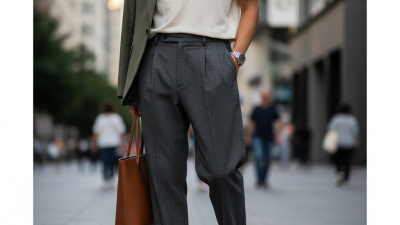
Fit must reflect local preferences and actual movement. High-rise trousers can support a formal silhouette, while a mid-rise shape may suit younger casual shoppers. A relaxed thigh works well for comfort-led markets. A tapered leg makes the cuff look sharper.

Keep the cuff stable, with clean stitching and enough weight to hold its shape. Pleats also change the visual balance.

Single forward pleats create a restrained profile. Double pleats add room and a stronger vintage character. Inward pleats may appear cleaner on slimmer designs.

I once underestimated how much a deep pleat affected perceived size. The sample looked elegant, but testers found it too generous at the waist. That mistake was useful.

Ask suppliers for graded samples, not only one fitting size. Review waistband pressure, pocket opening, and crease behavior after sitting.

There is no perfect fit. Target customers, price points, and climate should guide every specification.

Evaluate Wholesale Quality, Sizing, and Production Standards

How to Choose Pleated Cuffed Pants for Wholesale Buying?

Wholesale quality begins with the fabric and construction. Check fabric weight, recovery, and shrinkage after washing. Pleats should open evenly without pulling across the hips. Cuffs need firm stitching, clean corners, and consistent width. Inspect the inside, too. Loose threads often reveal rushed production. A practical sample check includes seam strength, zipper movement, button security, and colorfastness. Ask for test records when available, but verify them against the physical sample.

Sizing requires more than comparing a single waist measurement. Request a complete measurement chart for the waist, rise, thigh, inseam, cuff, and outseam. Confirm the grading rules between sizes. A two-centimeter difference can affect comfort and sell-through. Try samples on different body shapes. This step is often skipped. It should not be. Record acceptable tolerances in writing, including pleat placement and cuff height.

Production standards should be clear before any bulk order. Review the approved sample, fabric composition, care label details, and packaging requirements. Use a documented inspection plan for stitching, measurements, stains, and pressing quality. A pre-production sample can expose problems early, although it cannot guarantee perfect bulk consistency. That is an uncomfortable limitation. Recheck cartons during production, not only before shipment. Reliable suppliers should explain corrective actions, provide traceable inspection records, and communicate delays honestly. Superb presentation is not enough. Consistency matters more.

How to Choose Pleated Cuffed Pants for Wholesale Buying? - Evaluate Wholesale Quality, Sizing, and Production Standards

Evaluation Dimension Wholesale Benchmark Recommended Specification or Acceptance Range Verification Method Buying Decision
Fabric Composition Stable woven fabric suitable for trousers Common commercial options include polyester-viscose blends, cotton twill, or fabrics containing 2%–5% elastane for comfort. The fiber composition should match the product specification and care label. Review the fiber-content report or perform a laboratory fiber-composition test. Compare the result with the approved sample. Approve if consistent
Fabric Weight Appropriate for the intended season and silhouette Approximately 220–300 g/m² for medium-weight pleated trousers. Lighter fabrics may drape more easily but can show pocketing or pleat distortion. Measure fabric weight using a calibrated GSM cutter and scale. Test several fabric areas to confirm consistency. Verify before bulk order
Dimensional Stability Controlled shrinkage after laundering Set a written tolerance before production. A practical benchmark is no more than 3% length change and 3% width change after the agreed wash-care test. Use a pre-measured garment or fabric specimen and test according to ISO 3759 and ISO 6330, or the buyer’s equivalent approved procedure. Include in purchase terms
Colorfastness Color should remain stable during normal care and wear Target a minimum grade of 4 for color change and staining where applicable. Dark shades should receive additional rubbing and washing checks. Request testing based on ISO 105-C06 for washing and ISO 105-X12 for rubbing. Inspect both dry and wet crocking where relevant. Require test report
Pleat Formation Even, symmetrical, and visually stable pleats Pleat depth commonly falls between 2.5 and 4.0 cm. Pleat direction, spacing, and front alignment should match the approved sample on both legs. Measure pleat depth at the waistband and knee area. Check the garment on a flat surface and on a mannequin or fit model. Approve against sealed sample
Cuff Construction Secure folded hem with consistent width A visible cuff depth of approximately 4–6 cm is common. The cuff should sit evenly around the leg without twisting, puckering, or loose stitching. Measure cuff width at the front, side, and back. Pull-test the hem lightly and inspect the inside seam finish. Accept only if uniform
Stitch Density Clean seams with sufficient strength Use approximately 10–12 stitches per 3 cm for standard woven trouser seams, unless the approved technical pack specifies another setting. Count stitches over a 3 cm section and inspect skipped stitches, open seams, thread tails, needle damage, and uneven tension. Check during inline inspection
Seam and Stress Areas Reinforced at points exposed to pulling Bar-tacks or equivalent reinforcement should be used at pocket openings, belt-loop ends, fly areas, and other designated stress points. Perform visual inspection and manual pull testing. For formal testing, use an agreed seam-strength method such as ASTM D1683 or an equivalent standard. Mandatory for bulk production
Waistband and Closure Comfortable fit and secure fastening The waistband should lie flat without twisting. The hook, button, zipper, and belt loops should withstand repeated opening and closing without distortion. Check waistband recovery, zipper operation, button security, bartack quality, and alignment after repeated use simulation. Approve after wear test
Size Grading Consistent increments between sizes Create a measurement chart before production. A typical base chart may use 4 cm waist and hip increments between adjacent sizes, but the buyer’s target market should determine the final grade. Compare the size-set sample with the approved specification. Measure waist, hip, front rise, inseam, thigh, leg opening, and cuff width. Approve size set first
Measurement Tolerance Controlled variation in finished garments A common starting point is ±0.5 cm for small details and ±1.0 cm for major body measurements. Tolerances should be adjusted for fabric behavior and garment construction. Measure garments according to a signed measurement guide. Record actual measurements by size and identify recurring deviations. Define in technical pack
Fit and Mobility Comfortable movement without pleat pulling The wearer should be able to sit, walk, and bend without excessive strain at the seat, crotch, waistband, or pleats. The cuff should remain level during movement. Conduct a fit test in the intended size range. Check seated comfort, pocket opening, crotch balance, and leg twisting. Use a real fit test
Garment Appearance Uniform finish across the production lot No visible shade variation, fabric defects, press marks, oil stains, puckering, loose threads, or uneven pleats under normal retail lighting. Inspect garments under consistent lighting using a signed sample and a defect classification sheet. Inspect before shipment
Chemical and Safety Compliance Materials should meet the destination-market requirements Set limits for pH, restricted substances, formaldehyde, and colorants according to the importing country’s regulations and the buyer’s compliance policy. Request an independent laboratory report. Textile pH can be evaluated using ISO 3071; additional testing should reflect the destination market. Required for regulated markets
Inspection Standard Clearly defined lot-acceptance rules Many apparel buyers use ANSI/ASQ Z1.4 or ISO 2859-1 sampling plans, often with an AQL around 2.5 for major defects and 4.0 for minor defects. The final plan should be agreed in writing. Use a qualified inspector to check quantity, workmanship, measurements, labeling, packaging, and defects against the approved standard. Specify in the order contract
Production Capacity Supplier can meet the required quantity and delivery window Confirm monthly capacity, available sewing lines, fabric reservation, subcontracting controls, and production calendar before accepting the order. Review a capacity statement, production schedule, and previous delivery performance. Request progress updates during bulk production. Assess before deposit
Lead Time Realistic timing from approval to shipment A typical program may require 7–14 days for sample development and approximately 30–45 days for bulk production after material approval, depending on quantity and complexity. Obtain a written timeline covering fabric sourcing, cutting, sewing, finishing, inspection, packing, and shipment. Add schedule milestones
Packaging and Labeling Garments arrive protected and retail-ready Specify folding method, individual polybag requirements, carton dimensions, carton weight limits, size stickers, fiber labels, care labels, country-of-origin marking, and barcode format where required. Approve a packaging sample and perform a carton drop or handling review when the supply chain is long. Confirm before packing
Wholesale buying note: The benchmarks above are practical starting points rather than universal legal requirements. Final tolerances, testing methods, AQL levels, labeling rules, and chemical limits should be confirmed in the purchase specification and against the regulations of the destination market.

Compare Suppliers, Minimum Orders, Prices, and Customization Options

Choosing pleated cuffed pants for wholesale buying requires more than comparing the lowest quote. I usually request samples from three suppliers and inspect pleat alignment, cuff width, stitching, fabric weight, and shrinkage after washing. A reliable supplier should provide clear measurement charts, production photos, fabric details, and realistic delivery times. Ask whether quality checks happen during sewing, not only before shipment. Small differences become obvious across a large order.

Minimum order quantities can change the real cost. One supplier may accept 100 pieces but charge more for fabric and setup. Another may require 500 pieces but offer better unit pricing. Compare the complete quotation, including sampling, packaging, labels, shipping, and alterations. Ask whether mixed colors or sizes count toward the MOQ. This detail is often missed. It can affect cash flow and leftover inventory.

Customization should match your market, not merely look impressive. Discuss pleat depth, front closure, waistband construction, cuff height, pocket shape, fabric composition, and size grading. Request a pre-production sample before approving bulk cutting. Confirm color standards with physical swatches because screens can mislead. I once underestimated the effect of a heavier fabric on the trouser drape. The sample looked elegant, but the final fit felt too stiff. A second fitting session would have prevented that mistake. Suppliers who explain limitations honestly are usually safer partners than those promising every option.

Check Samples Before Placing a Bulk Order

How to Choose Pleated Cuffed Pants for Wholesale Buying?

Check Samples Before Placing a Bulk Order

A sample is not decoration. It is your first production warning. I check the waistband, pleat alignment, cuff width, and stitching before discussing quantities. The trousers should hang evenly on a mannequin and remain comfortable when seated. Measure the waist, hip, rise, inseam, and cuff opening twice. Small errors matter.

Test the sample in real conditions. Fold it, sit down, walk, and inspect the pleats afterward. A weak crease can open quickly, especially in blended fabrics. Wash one sample according to the proposed care instructions. Check shrinkage, color stability, seam twisting, and cuff recovery. Textile Exchange’s Materials Market Report 2024 reported 124 million tonnes of global fiber production in 2023. Polyester represented 57% of that volume, so fiber composition deserves careful checking. Ask for the exact blend and fabric weight, not only “premium fabric.”

Use a fitting model with the target market’s typical measurements. Record every correction in a sample approval sheet. A sample can pass visually and still reveal a weakness after washing. I have learned this the expensive way. WRAP reports that extending a garment’s life by nine months can reduce its carbon, water, and waste footprints by 20–30%. That makes seam strength and fabric durability commercial issues, not minor details. Approve bulk production only after the revised sample matches the agreed measurements. Almost right is not enough.

How to Choose Pleated Cuffed Pants for Wholesale Buying?

Check samples before placing a bulk order by scoring the key quality and production factors below.

Use a 10-point sample inspection scale before confirming wholesale production. Prioritize accurate sizing, stable pleats, clean cuff construction, fabric performance, and stitching quality to reduce bulk-order risks.