Sourcing Artisanal Pleated Garments globally requires more than finding a beautiful sample. It requires patient research, verified relationships, and respect for regional making traditions. A pleated silk blouse from Kyoto may involve hand-folding, steaming, and careful inspection. A cotton skirt from India may depend on block printing, small-batch dyeing, and monsoon-sensitive drying times.
Issey Miyake once observed, “Design is not for philosophy—it is for life.” This principle helps explain why sourcing decisions must consider movement, comfort, durability, and real working conditions. Buyers should visit workshops when possible, examine pleat recovery after washing, and record fiber content before placing orders. They should also ask who performs each stage. The answer can reveal hidden subcontracting or overlooked skills.
Reliable sourcing includes clear specifications, realistic quantities, transparent pricing, and written quality standards. Certifications may support due diligence, but they do not replace direct conversations with makers. A certificate cannot show whether a craftsperson has enough time to finish a complex panel properly.
The process is rarely perfect. Samples may arrive with uneven spacing, softened edges, or colors altered by local water. That is useful evidence, not simply failure. Experienced buyers revise measurements, packaging, and delivery schedules before production begins. They also leave room for human variation, because excessive uniformity can erase the character of artisanal work.
This guide explores how to identify capable partners, compare production regions, assess craftsmanship, and build responsible supply chains for Artisanal Pleated Garments. Tradition matters. So does practical accountability.
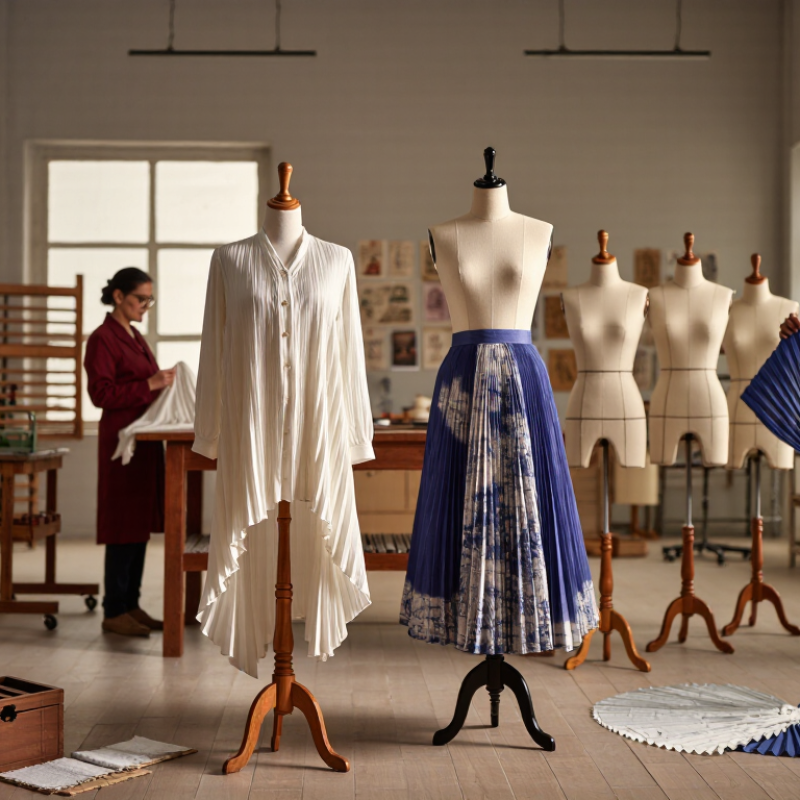
Artisanal pleated garments are not simply clothing with folded fabric. They combine deliberate pleat design, skilled handwork, and a visible relationship between maker and material. Pleats may be pressed, stitched, folded, or shaped through controlled finishing. Each method creates a different drape, texture, and production risk. The maker’s touch matters. A slight irregularity can show genuine craft, but it should not weaken wearability or comfort.
A sourcing objective should define quality before discussing price. Specify pleat depth, spacing, fabric weight, shrinkage limits, and acceptable variation. Also record measurements after washing, not only before it. I recommend requesting a development sample, a graded size sample, and a production-like sample. These reveal whether the workshop can repeat its technique across sizes. My own early briefs focused too heavily on appearance. They overlooked pressing time, repair capacity, and packaging damage. That was a costly lesson.
For global sourcing, assess the workshop’s process, communication, and documentation. Ask how artisans are trained and how each batch is checked. Review fiber details, care instructions, lead times, minimum quantities, and shipment conditions in writing. Photos help, but they cannot replace a physical sample. Compare samples under natural light and after gentle movement. A strong partner explains limitations clearly. I still treat perfect consistency with caution. Handmade work should feel human, yet the final garment must remain dependable.

Sourcing artisanal pleated garments begins with geography, not a supplier list. Japan offers precise folded-resist methods, especially on lightweight silk and cotton. Artisans may fold, bind, dye, and release the cloth by hand. The result carries small variations, which can signal human work. These pleats may not match industrial uniformity.
In India, regional draping traditions influence how pleats are planned and worn. Cotton and silk garments often require careful measurement around the body, with pressing done at different stages. Moroccan workshops commonly combine flowing caftan shapes with hand-finishing, decorative stitching, and controlled folds. In parts of Europe, linen and wool pleating remains connected to ceremonial, folk, or tailored dress. Each region needs separate technical questions. Ask about fiber preparation, pleat depth, pressing tools, and washing behavior.
A reliable sourcing process includes workshop visits, artisan interviews, and documented sample reviews. Request one raw sample, one washed sample, and one repeated sample. Compare shrinkage, edge stability, and pleat recovery. I would also record who performs each stage, because “handmade” can hide outsourced production. That assumption needs challenging. A beautiful sample may come from one highly skilled maker, not an entire production team. Timelines should include training, seasonal labor changes, and repairs. Ethical purchasing also means clear specifications, realistic quantities, and payment terms that do not punish slower handwork.
Evaluating an artisan begins with evidence, not polished photographs. Ask for recent samples, production records, and clear details about each operation. A workshop should explain pleat formation, pressing temperatures, fabric behavior, and expected variation. Visit the workspace when possible. Observe lighting, ventilation, storage, and cutting tables. Small details reveal working habits.
Material assessment needs both touch and documentation. Request fiber content, fabric weight, shrinkage results, dyeing information, and batch references. Test samples after washing, steaming, folding, and gentle abrasion. Pleats may relax beautifully, or disappear too quickly. Never judge from one swatch. Compare multiple lots and record measurements. Sustainability claims also require evidence, not attractive wording. Supplier records may be incomplete; that weakness deserves an honest note, not a convenient promise.
Craftsmanship appears in alignment, edge control, seam tension, and repeatability. Examine the garment inside out. Uneven spacing can show hand character, but careless stitching is different. Ask how makers handle corrections, rejected pieces, and changing measurements. Skilled workshops welcome technical questions and communicate limits early. That matters more than confident sales language. Build a small pilot order before scaling. A pilot can expose timing, packing, and consistency problems. No checklist is flawless. Local expertise may challenge the buyer’s assumptions, and the buyer should revise the brief when necessary.
Pleated garments need measurable quality standards, not only attractive samples. I begin with a signed reference garment, a graded measurement chart, and a pleat map. The map records pleat pitch, depth, direction, and spacing at each panel. For example, a 6 mm pitch should allow a tolerance of plus or minus 1 mm. That small detail prevents visible waves at the waistband. Factories should also record fabric composition, shrinkage, thread type, and pressing temperature. Textile Exchange’s Materials Market Report 2024 estimates global fiber production reached 124 million tonnes in 2023. Material choices therefore deserve careful documentation.
Construction checks should happen before bulk production. Inspectors can count pleats across a 10 cm section and compare both garment sides. They should examine skipped stitches, uneven folds, loose threads, and stress around pocket openings. Test one garment after washing under ISO 6330 conditions, then assess appearance using AATCC 124 principles. Measure pleat recovery after drying and compare photographs under fixed lighting. Do not trust one perfect sample. It may hide workshop inconsistency.
Seams matter.
Use seam-strength testing where the design creates tension, following a suitable ASTM D1683 method. WRAP reports that extending clothing life by nine months can reduce carbon, water, and waste footprints by about 20–30%. That makes durable pleat retention a sourcing issue, not merely a visual preference. I would still question a pass rate based on five garments. Ten or more pieces across different production days provide stronger evidence. Some artisan variation is valuable, but unrecorded variation becomes a costly defect.
Sourcing artisanal pleated garments globally requires more than attractive photographs. I begin with a technical brief covering fiber content, pleat depth, measurements, shrinkage limits, and finishing details. A sample should be tested after washing, pressing, and gentle folding. Pleats can relax during transport. That risk must be measured, not guessed. I request production photos, workshop capacity, and evidence of safe working conditions. Clear records build trust. They also expose gaps.
Ethical trade needs practical checks at every order stage. I confirm wage practices, working hours, age verification, fire safety, and subcontracting arrangements through documented assessments. Small workshops may lack polished paperwork. That does not excuse silence. A respectful conversation can reveal more than a checklist, although conversations are not proof alone. Payment terms should protect both sides, with deposits, milestones, and quality holds written plainly. I avoid promising volumes before capacity is verified.
International logistics require accurate invoices, packing lists, origin information, and product classifications. Import requirements differ by destination, so a licensed customs professional should review the shipment. I also plan moisture protection, carton strength, labeling, and contingency time for inspections. Delays happen. My early forecasts have sometimes been too optimistic, especially around holiday congestion. That lesson changed my process: I now add buffer days and confirm handoffs in writing. Final inspections should compare finished pieces against the approved sample, not memory. Good sourcing remains a working discipline, not a perfect formula.