Choosing a China Top Pleated Formal Gown Supplier? requires more than comparing catalog photographs and factory prices. A dependable supplier should demonstrate fabric knowledge, stable workmanship, and clear communication. Their pleats should remain balanced from the neckline to the hem. Stitching should feel secure, not hurried. Ask for production samples, fabric swatches, and close photographs of seams before placing a large order. Small details matter.
An experienced supplier can explain how satin, chiffon, tulle, and crepe behave during pleating. They should also discuss lining, boning, closures, measurements, and packaging. A professional team normally provides size charts, sample approval, quality checks, and realistic delivery timelines. These steps support consistent results for bridal parties, evening events, retail collections, and formalwear brands. However, no supplier is perfect. Color differences may appear between screens and physical fabric. Custom pleats can also change slightly after pressing or transport. That deserves honest discussion.
This guide examines practical signs of supplier reliability in China. It considers manufacturing experience, customization ability, communication habits, and after-sales support. Factory audits, verified business information, and recent client feedback can strengthen confidence. Pricing alone is not enough. A low quotation may exclude lining, alterations, inspection, or safer packaging. Look closely. The best partnership combines elegant design with predictable production. Even then, buyers should test samples carefully and record approved specifications. That cautious approach may feel slower, but it helps protect quality, budgets, and customer expectations.
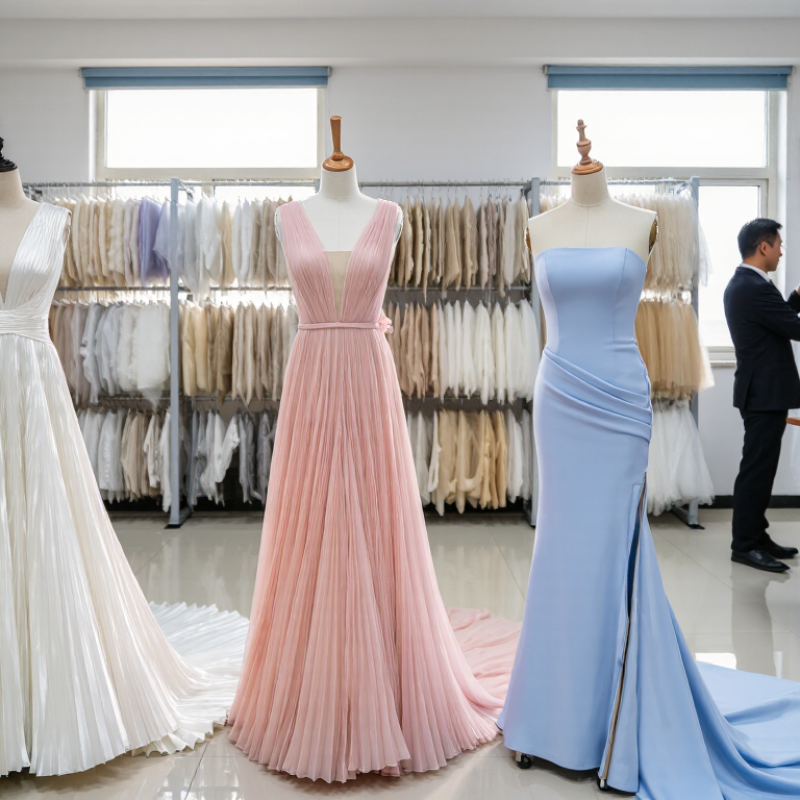
China Top Pleated Formal Gown Supplier?
Definition of Pleated Formal Gowns
A pleated formal gown is an elegant dress shaped with structured folds in its fabric. These folds may be knife pleats, box pleats, accordion pleats, or soft sunray pleats. Each style changes the gown’s movement, volume, and visual balance. The pleats can appear on the skirt, bodice, sleeves, or neckline. It is not simply decoration. Pleating is a construction method that affects comfort, weight, and fit.
In professional gown development, fabric selection is essential. Polyester blends can hold sharp pleats during long events, while satin creates a smoother and more reflective appearance. Chiffon produces lighter movement but may require careful lining and stitching. A reliable supplier should inspect pleat spacing, seam strength, hem alignment, and color consistency. Small errors become visible under stage lighting. Details matter.
A well-made pleated formal gown should move naturally without losing its shape. The waist must remain secure, while the pleats should fall evenly from the chosen design point. Custom measurements are often more dependable than standard sizing, especially for full-length gowns. One practical limitation is that some pleats may relax after cleaning or extended wear. This point deserves honest discussion. A beautiful sample does not always guarantee identical production results. Clear fabric specifications, approved samples, and final inspections help reduce that risk.
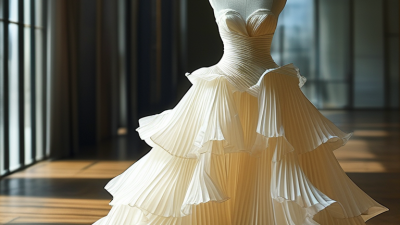
China’s pleated formal gown manufacturing industry combines pattern engineering, textile sourcing, and disciplined workshop production. Suppliers commonly use satin, chiffon, organza, and recycled polyester blends. Each fabric reacts differently to heat, pressure, and humidity. That matters.
Modern pleating equipment can create accordion, knife, crystal, and irregular pleats with controlled spacing. Skilled technicians still adjust settings by hand. They inspect fabric tension, edge alignment, and pleat recovery after steaming. A gown may look elegant, yet hidden tension can distort the waistline during movement.
Careful suppliers test samples before approving bulk production. They record fabric lots, machine settings, and measurement changes for better traceability.
Quality control usually covers seam strength, lining placement, zipper function, embellishment security, and color consistency. Measurement charts should match the approved sample, not only a digital file. Factories also review restricted-substance requirements and safe material handling for international markets.
However, production is not flawless. Humidity changes can affect pleat sharpness, and rushed sampling may conceal fitting problems. A reliable manufacturer welcomes corrective feedback instead of defending every first attempt.
Buyers should request physical samples, construction photos, inspection records, and clear tolerance standards before placing larger orders. Supplier capability is proven on the worktable, not through polished promises.
Evaluating a top pleated formal gown supplier in China requires more than viewing polished photographs. Request a current sample in your chosen fabric, color, and size. Examine pleat spacing under bright light. The folds should remain even around the waist, bodice, and hem. Check whether the fabric recovers after gentle handling. Weak pleats may flatten during shipping or fitting.
Ask for measurable production details. A reliable supplier should explain fabric composition, lining, seam allowances, grading, and pressing methods. Request a size chart with garment measurements, not only body measurements. Confirm tolerance levels for bust, waist, length, and pleat alignment. Production records, inspection reports, and clear quality procedures show professional discipline. Factory photos are useful, but a live video inspection provides stronger evidence. Ask to see cutting, sewing, pressing, and final inspection areas.
Communication also reveals experience. The supplier should answer technical questions directly and flag risks before production begins. Confirm sample approval steps, lead times, packaging, replacement policies, and shipping documents in writing. I once trusted a beautiful sample too quickly; the bulk fabric reflected light differently and changed the gown’s appearance. That mistake taught me to test fabric under daylight, warm light, and camera lighting. Request pre-shipment photos and random measurements before accepting an order. A dependable partner may not promise perfection, but will document problems and correct them promptly.
| China Top Pleated Formal Gown Supplier? - How to Evaluate a Top Pleated Formal Gown Supplier | |||||
|---|---|---|---|---|---|
| Evaluation Dimension | What to Verify | Practical Benchmark | Required Evidence | Weight | Score |
| Pleat Construction Quality | Assess pleat depth, spacing, symmetry, edge finishing, and consistency across the full gown. | Pleat spacing deviation no greater than ±3 mm; no visible skipped, crushed, or uneven pleats. | Approved sample, measurement chart, inspection photos, and pre-shipment inspection report. | 15% | /15 |
| Pleat Retention | Confirm whether pleats remain defined after pressing, folding, transport, and care-label testing. | Pleat appearance remains acceptable after at least 5 care cycles or the agreed equivalent test. | Fabric test results, care instructions, wash-test photographs, and retained sample. | 12% | /12 |
| Fabric Specification | Check fiber composition, fabric weight, opacity, drape, stretch recovery, and colorfastness. | Formal gown fabric commonly falls around 100–220 GSM, with composition matching the approved specification. | Technical data sheet, composition test, GSM report, color swatches, and laboratory test results. | 10% | /10 |
| Size and Fit Control | Review grading accuracy, measurement tolerances, sleeve balance, neckline placement, and hem alignment. | Critical body measurements controlled within approximately ±1 cm, unless otherwise agreed in the tech pack. | Approved size chart, graded pattern, fit sample, measurement report, and alteration record. | 10% | /10 |
| Quality Assurance System | Evaluate incoming-material inspection, in-line checks, final inspection, defect classification, and corrective action. | Documented inspection at major production stages, with an agreed AQL standard for final shipment. | Quality manual, inspection checklist, corrective-action reports, and recent anonymized QC records. | 12% | /12 |
| Sampling and Development | Measure the supplier's ability to convert sketches, tech packs, fabric references, and pleat specifications into samples. | First sample in approximately 7–15 working days after receiving complete specifications; revisions tracked clearly. | Sample timeline, development quotation, revision log, pattern comments, and approved pre-production sample. | 8% | /8 |
| Production Capacity | Verify available sewing, pleating, pressing, finishing, and inspection capacity during the required delivery period. | Capacity should cover the order quantity with at least 10–15% schedule flexibility. | Monthly capacity plan, production schedule, process flow, and factory or workshop audit records. | 8% | /8 |
| Minimum Order Quantity | Compare minimum quantities by style, color, size range, fabric, and custom pleat treatment. | A flexible program may support approximately 50–200 pieces per style or color, depending on customization. | Written MOQ schedule, surcharge policy, fabric MOQ, and small-batch production terms. | 8% | /8 |
| Lead-Time Reliability | Check whether the quoted timeline includes fabric sourcing, pleating, production, inspection, and packing. | Bulk production commonly requires about 30–60 working days after sample approval and material confirmation. | Previous delivery records, production calendar, milestone schedule, and delay escalation procedure. | 7% | /7 |
| Compliance and Traceability | Confirm product safety documentation, restricted-substance controls, material traceability, and export documentation. | Materials and finished garments should meet the destination market's applicable textile and chemical requirements. | Material declarations, test reports, supplier records, carton marks, and shipping documents. | 5% | /5 |
| Packaging and Shipment Protection | Assess folding method, moisture protection, carton strength, labeling, and measures that prevent pleat crushing. | Each gown should be protected against humidity, abrasion, and compression during normal international transport. | Packaging specification, carton dimensions, packing photos, drop-test plan, and shipping marks. | 5% | /5 |
| Total Evaluation Score | 100% | /100 | |||
| Scoring guide: 90–100 = strong candidate; 75–89 = acceptable with corrective actions; below 75 = conduct additional verification before placing a bulk order. Benchmarks should be adjusted according to the destination market, garment construction, order quantity, and approved technical specifications. | |||||
China Top Pleated Formal Gown Supplier?
Production Standards, Customization, and Quality Control
Choosing a pleated formal gown supplier requires more than comparing photos and prices. Experienced production teams begin with approved fabric, accurate measurements, and a written sample specification. Pleat depth, spacing, lining, zipper placement, and hem allowance should be recorded clearly. Small differences can change the gown’s movement and final appearance.
A capable factory should control each production stage. Cutting teams check fabric direction before panels are assembled. Sewing inspectors review seam strength, thread tension, and invisible finishing. Pressing staff protect pleats with suitable temperature and moisture settings. The supplier should also verify color consistency under standard lighting. It sounds basic. It is not always consistent.
Customization works best through physical samples, not vague instructions. Buyers can request changes to neckline shape, sleeve volume, waist structure, fabric weight, or decoration placement. Measurements should include tolerance limits, because hand finishing can create minor variation. A reliable supplier keeps inspection records, material details, and approval samples for every order. Final checks should cover stains, loose threads, damaged pleats, labeling, packing, and carton counts. Photos taken during inspection provide useful evidence, although photographs cannot replace hands-on review. No factory process is flawless. Honest communication about rejected panels, delayed fabric, or failed samples is more valuable than confident promises.
Choosing a reliable pleated formal gown supplier requires more than polished catalog photos. Request a sewn sample, fabric swatches, size charts, and recent inspection records. Examine pleat alignment, lining attachment, zipper strength, and hem recovery after steaming. A capable factory should explain its pattern process and production capacity clearly. Ask how it controls color variation between dye lots. Small details reveal bigger controls. In supplier reviews, I have found consistent samples matter more than impressive promises.
Pricing should separate fabric, labor, packaging, sampling, and inspection charges. Compare quotations using identical specifications, including fabric weight, embellishment density, and carton measurements. A low unit price may hide high minimum order quantities or costly revisions. Request tiered pricing for 100, 300, and 500 pieces. Confirm payment terms, sample fees, revision costs, and quote validity in writing. The cheapest quote is rarely the safest. Still, my first comparison can be wrong when fabric prices shift.
For export orders, confirm Incoterms, port options, lead time, and document responsibility. Verify destination labeling, textile documentation, and customs descriptions before production. The supplier should provide accurate commercial invoices and packing lists. Check carton strength before booking freight; formal gowns crush easily. A pre-shipment inspection should verify measurements, pleat shape, color, stains, and quantity. Build buffer time for holidays, remakes, and customs questions. Do not rely on verbal assurances. A trial order exposes weaknesses without risking a full seasonal purchase.