Leave Your Message

7 Tips for Buying Pleated Blouse Sleeves

A Pleated Blouse Sleeve can look striking on a hanger and feel awkward after an hour of wear. The difference often lies in small details: where the pleats begin, how much room the upper arm has, and whether the cuff sits comfortably at the wrist. Pattern-making specialist Nadia Mercer puts it this way: “Pleats should shape the sleeve, not restrict the person wearing it.” Treat that as a practical buying principle, not a substitute for trying the blouse on.

This guide’s seven tips help you inspect those details before you buy. Check the fabric in natural light; crisp cotton may hold its folds, while soft rayon can drape more loosely. Look closely at the stitching where each pleat meets the sleeve. Then lift your arms, bend your elbows, and notice whether the fabric pulls across your back. Small test. Useful answers.

Fit is personal. A sleeve that looks elegant in a product photo may feel bulky beneath a jacket, and sizing labels can vary between brands. Compare garment measurements when available, and read return terms before ordering. I would also pause over delicate pleats that already look uneven in the listing photos. That may be the lighting. Or it may be a clue. The tips ahead cover silhouette, fabric, construction, comfort, sizing, styling, and care, so you can choose a blouse that works beyond the first impression.
7 Tips for Buying Pleated Blouse Sleeves

Understand Pleated Sleeve Styles and How They Are Made

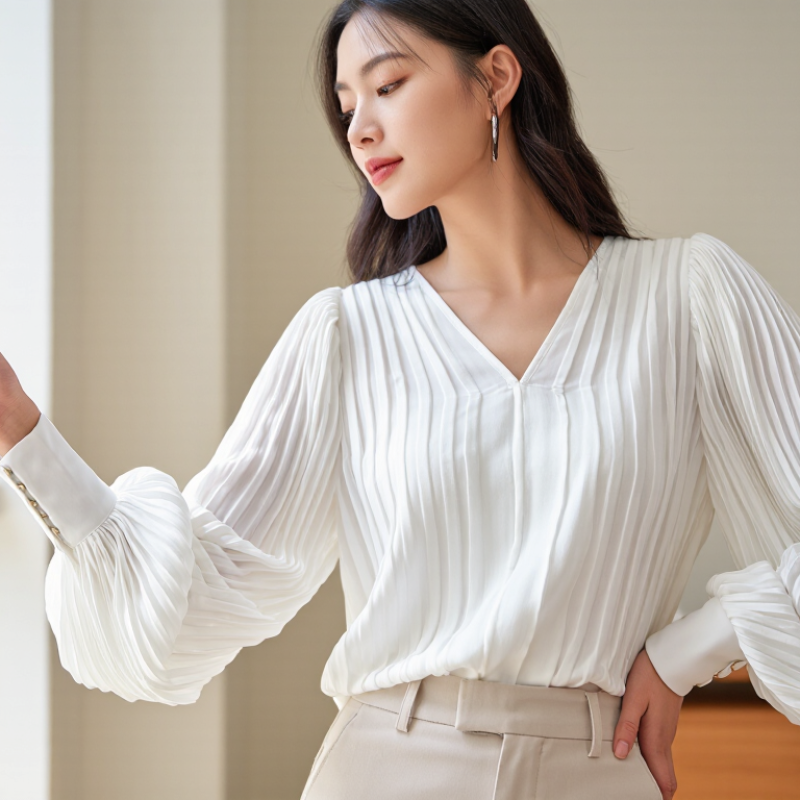
Pleated sleeves begin with folds, but their shape depends on how those folds are arranged. Knife pleats turn in one direction and create a neat, narrow rhythm. Box pleats meet in opposite directions, adding a little structure and room. Accordion pleats use repeated folds that open as the arm moves. Some blouses combine pleats with gathers, so the sleeve looks softer rather than sharply pressed. The difference is visible. Check whether folds start at the shoulder, continue down the sleeve, or open near the cuff.

Construction affects comfort as much as appearance. A maker usually folds and presses the fabric, then secures the pleats with stitching at the sleeve head, cuff, or another seam. Fine, light fabric can make small folds look delicate, while crisp fabric holds a stronger shape. Dense pleats may feel restrictive if the sleeve lacks enough ease. Look inside. Neat stitching and evenly spaced folds are useful clues, though slight variation can occur, especially with soft fabric. I would not judge a sleeve from a front photo alone; side views reveal whether the pleats lie flat or twist. Check the cuff opening and arm movement, too. A beautiful fold can still be awkward to wear.

Choose a Sleeve Shape for Your Fit and Intended Use

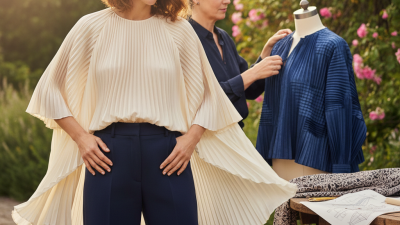
Pleated sleeves add volume, so choose their shape around your shoulders, upper arms, and daily tasks. SizeUSA’s national anthropometric study scanned more than 10,000 adults, documenting wide variation in body proportions. That matters: a sleeve that looks roomy on one body may pull at another. A fitted shoulder with soft pleats often suits narrow frames; fuller shoulders may feel easier in a raglan or dropped-shoulder cut. Check the armhole, not just the cuff.

Fit tip: For desk work or commuting, try a modest pleat that opens below the shoulder. Raise your arms in the fitting room. If the blouse lifts or the pleats strain, size or shape may be wrong. Small test. For dinners or events, deeper pleats can create a more sculptural silhouette, but stiff fabric may crowd a coat sleeve.

Use and fabric should guide the choice, too. Lightweight cotton or viscose lets pleats fall gently; crisp fabric holds a stronger shape. If you carry bags or reach overhead often, avoid bulky pleats near the elbow. Sit, reach, and bend before deciding. I still find sleeve labels vague, so judge movement and mirror balance over the product description.

Compare Fabrics for Comfort, Drape, and Pleat Retention

Fabric affects how pleats feel, hang, and recover after wear. Cotton feels breathable against the skin, but its pleats may soften and wrinkle during a long day. A cotton blend can keep the surface smoother while retaining some of cotton’s airy feel. Check the fabric label, then gently pinch a sleeve pleat to see whether it springs back.

Polyester often holds pleats well and resists creasing, which can help sleeves look crisp after sitting or commuting. However, dense polyester may feel warm, especially in a close-fitting blouse. Lightweight viscose or rayon usually drapes softly around the arm, but its pleats may need careful washing and reshaping. Follow the garment’s care label; heat and rough handling can affect the finish. Feel the difference.

Linen offers a relaxed texture and good airflow, though its natural creases can make pleats look less sharp. For comfort, move your arms and notice whether the sleeve pulls at the elbow or feels stiff at the cuff. For drape, let the sleeve fall naturally rather than judging it on a hanger. This test is imperfect: lighting and garment construction also change how pleats appear. A fabric that looks crisp in a fitting room may behave differently after several hours of wear.

7 Tips for Buying Pleated Blouse Sleeves - Compare Fabrics for Comfort, Drape, and Pleat Retention
Tip Fabric to Consider Comfort & Breathability Drape Pleat Retention What to Check Before Buying
1. Choose a lightweight option for soft, airy sleeves. Cotton voile Lightweight and breathable; may feel crisp rather than silky. Soft, airy drape with some body. Usually moderate; fine pleats can relax with wear or washing. Look for evenly pressed pleats and check whether the care label allows machine washing.
2. Pick a crisp fabric when you want more defined pleats. Cotton poplin Breathable and smooth, though it can feel firmer than voile. More structured than fluid. Often holds a pressed shape reasonably well, but cotton can wrinkle. Check that the sleeve has enough ease; stiff fabric may feel restrictive around the elbow.
3. Favor a fluid fabric for soft, flowing volume. Viscose (rayon) challis Often cool and smooth to the touch; can be less durable when wet. Fluid and drapey, with a gentle fall. Typically lower than crisp woven fabrics; pleats may soften during wear. Check washing instructions and inspect seams, since some viscose fabrics need gentle handling.
4. Consider a sheer fabric for light, delicate pleats. Polyester georgette Lightweight, but generally less breathable than cotton or linen. Flowing with a lightly textured surface. Can retain shape better than many soft natural-fiber fabrics, depending on construction and finish. Check transparency, lining, and whether the pleats are stitched or only pressed.
5. Look for a refined drape for dressier sleeves. Silk crepe de chine Light and smooth; comfort varies with weave, lining, and climate. Fluid, with a subtle crepe texture. Pressed pleats may relax; delicate care is often needed. Read the care label carefully and examine the pleats for consistent spacing and secure stitching.
6. Choose a linen blend for a breathable, more textured look. Linen-cotton blend Generally breathable; the surface may feel slightly textured. Relaxed and lightly structured. Usually moderate to low; linen is prone to creasing and softening. Check the fiber percentages and expect a naturally rumpled appearance between presses.
7. Match pleat construction to your care routine. Any fabric; compare stitched and heat-set pleats Comfort depends mainly on the fabric, lining, and sleeve fit. Construction affects how sharply the sleeve opens and falls. Stitched pleats are generally more secure than pleats held only by pressing; heat-set performance varies by fiber and care. Check the product details for pleat construction, washing instructions, and any limits on ironing or steaming.

Check Sizing, Construction Quality, and Pleat Consistency

Before choosing a pleated-sleeve blouse, compare the size chart with your shoulder, upper-arm, and bust measurements. A sleeve can fit at the wrist yet pull across the arm when you bend your elbow. Check the garment’s finished measurements, not just the size label. If possible, raise your arms and reach forward while trying it on. Notice any tightness. A little ease helps pleats fall naturally instead of spreading under tension.

Inspect the seams and pleat stitching in bright, even light. Stitching should look secure, with no skipped sections, loose threads, or puckering where the sleeve joins the body. Gently move the fabric; the pleats should open and settle without twisting. Compare both sleeves side by side. Small differences can happen with handmade or soft fabrics, but uneven folds may signal inconsistent construction. Look for pleats that repeat in similar widths and sit at matching angles. Also check the care label: delicate fabric may need gentle washing to keep its shape. One detail is easy to miss: a sleeve can look crisp on a hanger but lose definition after wear. Consider whether you’ll maintain it. That trade-off matters.

Assess Care Needs, Versatility, and Value Before Buying

Pleated sleeves look graceful on a hanger, but care needs can change their real value. Check the garment label before buying: washable polyester blends may be easier to manage than delicate fabrics that require special cleaning. Ask whether the pleats are stitched or heat-set, and inspect how they fall at the cuff. A few uneven folds can look charming; they can also become frustrating after washing. Keep it honest: care instructions do not always reveal how well pleats recover. If possible, gently scrunch a sleeve and see whether it springs back.

Versatility matters just as much. Try picturing the blouse with straight-leg trousers, a simple skirt, and a cardigan; bulky sleeves may catch beneath fitted layers. WRAP’s 2012 Valuing Our Clothes report estimated that extending a garment’s active life by nine months could reduce its carbon, water, and waste footprints by about 20–30%. That makes repeat wear a practical value test, not just a sustainability slogan. Consider cost per wear: a $60 blouse worn 30 times costs $2 per wear. A cheaper option worn twice may be poor value. Still, predictions are imperfect. Check seam quality, sleeve comfort, and whether you would reach for it on an ordinary Tuesday.

Pleated Blouse Buying Tip: Check the Care Label

Laundry care labels may show maximum wash temperatures from 30°C to 95°C. Before buying a pleated blouse, check its care label and choose a garment whose washing requirements fit your routine. Always follow the instructions on the specific garment.