Leave Your Message

How to Source Pleated Cuffed Pants for Bulk Orders?

Sourcing Pleated Cuffed Pants for bulk orders requires more than finding a low factory price. Buyers must connect design, fabric performance, fit consistency, and production control. Giorgio Armani once said, “Elegance is not standing out, but being remembered.” That principle matters here. A well-made pair should look distinctive without becoming difficult to sell.

The process starts with a precise technical pack. Specify the number of pleats, cuff width, rise, leg shape, waistband construction, pocket depth, and button material. Include graded measurements for every target size. A supplier should also confirm fabric composition, weight, shrinkage, colorfastness, and pressing requirements. Wool blends may hold pleats sharply, while cotton twill can offer a more casual appearance. Both require different testing.

Request a development sample before discussing full production. Check how the pleats open while walking. Inspect whether the cuffs sit evenly above the shoe. Measure the waistband after washing, not only before it. Small differences become expensive across hundreds of units. Very expensive.

Experienced sourcing teams compare factories through sample quality, communication speed, audit records, and realistic capacity. A factory promising everything immediately may deserve closer questions. Ask for a pre-production sample, an inspection plan, carton specifications, and a clear schedule. These details protect the order when fabric delays or sizing corrections appear.

This guide explains how to evaluate suppliers, negotiate minimum order quantities, control quality, and reduce avoidable production risks. The method is practical, but not perfect. Fit preferences change by market, and one approved sample cannot solve every issue. Careful review remains necessary.
How to Source Pleated Cuffed Pants for Bulk Orders?

Define Specifications for Pleated Cuffed Pants

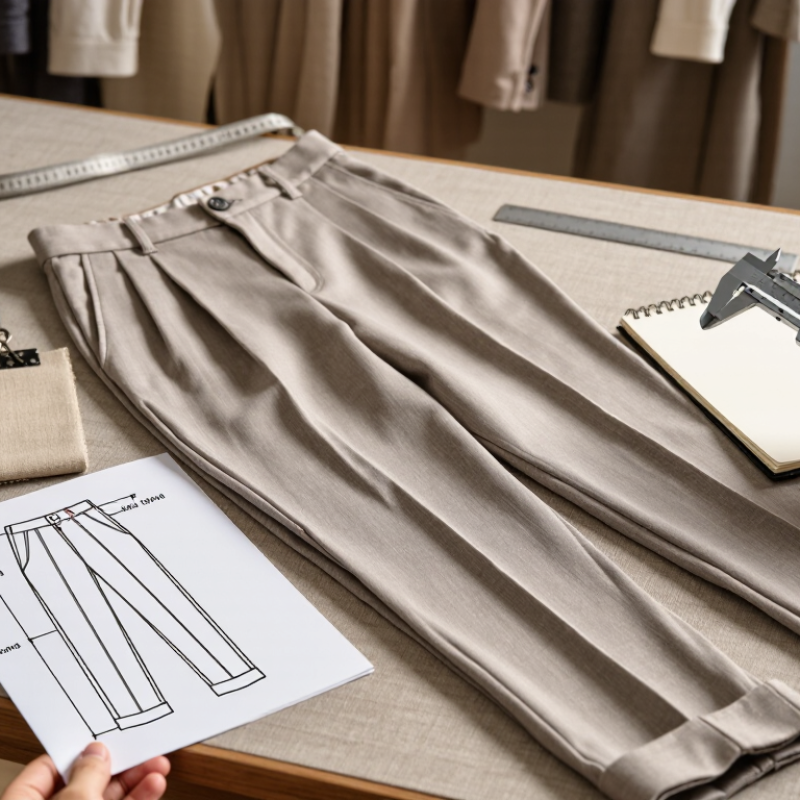
Before requesting bulk quotes, define the trousers like a measurable product. State the fiber blend, fabric weight, weave, finish, and color standard. For warm-weather trousers, a lighter woven fabric may improve comfort. Heavier cloth can hold pleats and cuffs better. Do not rely on phrases like “premium quality.” They create avoidable disputes. Specify the front pleat count, pleat direction, pleat depth, cuff height, and hem circumference. Include a reference sketch and a sealed approval sample.

Measurements need tolerances. List the waist, hip, rise, thigh, inseam, knee, and cuff opening for every size. A practical tolerance might be plus or minus 0.5 centimeters for key areas. Confirm whether measurements are taken flat or around the garment. Small differences can change the silhouette. Check waistband construction, belt-loop width, pocket angle, closure type, and stitch density. The inside matters too. Loose threads and uneven bartacks often appear during production. A first sample may look correct and still shrink after washing.

Specify fabric testing before cutting. Request shrinkage results, colorfastness checks, seam strength, and pilling performance when relevant. Define the size ratio, carton quantity, folding method, and inspection level in writing. Ask for a pre-production sample from bulk fabric, not leftover sample cloth. That step is easy to skip. It can also expose shade variation early. Review every comment with dated measurements and photographs. Clear specifications reduce sampling cycles, but they cannot replace a physical inspection.


Identify and Evaluate Reliable Bulk Clothing Suppliers

Reliable suppliers for pleated cuffed pants should prove their capabilities through samples, records, and clear communication. A polished website is not enough. Request a physical sample with matching pleat depth, cuff width, waistband structure, and pocket placement. Check whether the pleats remain sharp after washing and pressing. Small details matter.

Ask for fabric composition, weight, shrinkage results, colorfastness information, and size measurements. A supplier should explain its minimum order quantity, production capacity, sampling timeline, and quality inspection process. Compare these details with your tech pack, not just with the quoted price. Very low prices may hide weaker fabric or rushed stitching. That can become expensive later.

Review factory photos, recent production examples, and business documents before placing a bulk order. If possible, use an independent inspection before shipment. Confirm how the supplier handles measurement errors, damaged units, late delivery, and approved sample changes. Keep every agreement in writing. Communication should feel precise, not evasive. One imperfect area deserves attention: even a responsive supplier may underestimate seasonal delays. Leave practical time for fabric approval, fitting revisions, and final packing checks. Evaluate consistency over promises.

Typical Timeline for Sourcing Pleated Cuffed Pants in Bulk

Planning ranges commonly used in apparel procurement are shown in calendar days. Confirm fabric availability, production capacity, inspection requirements, and shipping terms with each supplier before placing an order.

The timeline is a practical industry planning estimate: actual lead times vary by order quantity, fabric sourcing, customization, quality standards, and destination.

Request Samples and Verify Quality Standards

When sourcing pleated cuffed pants for bulk orders, request samples before discussing final production. Ask for one sample in the intended fabric and one in the largest size. Check pleat alignment, cuff width, waistband tension, pocket depth, and seam strength by hand. The front pleats should fall evenly without twisting after movement.

Use a clear quality checklist with measurable standards. Record fabric composition, fabric weight, shrinkage limits, colorfastness, and acceptable measurement tolerances. Test the sample after washing, pressing, and wearing for several hours. Pay close attention to knee bagging and cuff recovery. These details often reveal problems that photographs hide. Request a graded size set, not only a medium sample. A medium size can look perfect.

I also recommend requesting a pre-production sample before approving the full order. Compare it with the approved reference sample under natural light. Check stitching density, thread trimming, label placement, and pressing marks. Independent inspection can verify quantities and measurements before shipment.

Keep dated photos and signed measurement sheets for each approval stage. Small oversights become expensive at scale. I once underestimated fabric shrinkage on a trial order, and the finished trousers felt noticeably shorter. That mistake changed my process.

Now, every sample faces a wash test, measurement review, and practical fit check. Perfect samples are not enough. Reliable records matter.

Compare Pricing, Minimum Orders, and Production Terms

Sourcing pleated cuffed pants in bulk starts with a clear cost comparison. Request quotes for the same fabric, weight, color, pleat depth, cuff width, and size range. A lower unit price may hide extra charges for sampling, grading, labels, or packaging. Ask whether prices include pressing and final inspection. I prefer a line-by-line quotation, because vague totals create problems later.

Minimum order quantities can differ by color, fabric, and size. One supplier may accept 300 pieces, but require 100 pieces per color. Another may quote better pricing at 1,000 pieces. Calculate the cost of leftover fabric before choosing the smaller order. Small runs often carry higher sampling and setup costs. That detail is easy to miss.

Production terms need equal attention. Confirm sample approval, fabric reservation, payment stages, production days, and shipping readiness in writing. For pleated trousers, inspect the first production pieces carefully. Check that pleats align, cuffs hold their shape, and waist measurements match the approved chart. I once focused too much on the unit price and underestimated alteration delays. The final margin suffered. A practical agreement should also define acceptable measurement tolerances, replacement terms for defective pieces, and progress updates with dated photos. Do not assume “ready in thirty days” means thirty days after payment; clarify whether fabric sourcing and approval time are included.

How to Source Pleated Cuffed Pants for Bulk Orders? — Compare Pricing, Minimum Orders, and Production Terms
Product Specification Typical Fabric and Construction Indicative FOB Price per Pair (USD) Typical MOQ per Color Sample Lead Time Bulk Production Lead Time Common Payment Terms Suitable Order Profile
Entry-Level Pleated Cuffed Pants Polyester-viscose blend, 180–220 gsm; front pleats, fixed cuff, basic waistband, standard pocketing $7.50–$12.00 300–500 pairs 7–12 days 35–50 days after approval 30% deposit; 70% before shipment Uniform programs, promotional apparel, price-sensitive retail orders
Mid-Range Cotton-Twill Pants 100% cotton or cotton-elastane twill, 220–280 gsm; structured pleats, stitched cuff, branded-size labeling $11.00–$18.00 300–600 pairs 10–15 days 45–60 days after approval 30% deposit; balance against inspection or shipping documents Workwear, casual collections, department-store private labels
Stretch Smart-Casual Pants Cotton-polyester-elastane blend, 200–260 gsm; comfort stretch, reinforced pleats, durable cuff and belt loops $13.00–$21.00 500–800 pairs 10–15 days 45–65 days after approval 30% deposit; 70% before shipment or against approved inspection Uniforms, hospitality apparel, repeat wholesale programs
Premium Wool-Blend Trousers Wool-polyester or wool-viscose blend, 230–300 gsm; tailored pleats, lined waistband, clean-finished cuff $20.00–$35.00 300–500 pairs 14–20 days 55–75 days after approval 30% deposit; 70% after final inspection or before shipment Formalwear, premium uniform programs, tailored retail collections
Fully Custom Development Buyer-selected fabric, custom block, special pleat depth, adjustable or permanent cuff, custom trims and packaging $18.00–$40.00+ 500–1,000 pairs 15–25 days 60–90 days after approval Development fee may apply; commonly 30% deposit and 70% before shipment New seasonal launches, exclusive cuts, detailed private-label specifications
Small Trial Order Existing pattern and stock fabric; limited color range; standard cuff and packaging $14.00–$25.00 100–299 pairs 7–14 days 30–45 days after approval 50% deposit; 50% before shipment Market testing, fit validation, first-time sourcing, limited collections
Indicative manufacturing benchmarks only. Actual pricing and lead times vary according to fabric composition, weight, dyeing method, pleat construction, cuff design, size ratio, testing requirements, packaging, order quantity, destination, and shipping terms. Confirm the final quotation, approved sample, tolerance sheet, inspection standard, and Incoterm in writing before placing a bulk order.

Finalize Bulk Orders, Inspections, and Shipping Plans

For pleated cuffed pants, finalize the bulk order only after confirming measurements, fabric recovery, and cuff construction. The pleats should open evenly after sitting and folding. Request a sealed sample with approved waist, inseam, rise, cuff width, and label placement. Record every tolerance in the purchase order. Small errors multiply across hundreds of pairs.

Use a pre-shipment inspection before releasing the balance payment. Inspectors should check dimensions, stitching, stains, pressing marks, zipper function, and carton counts. ISO 2859-1 can guide sampling plans, but the buyer must set acceptable quality limits clearly. UNCTAD’s Review of Maritime Transport 2024 states that over 80% of world merchandise trade by volume moves by sea. Therefore, confirm booking space, port pairs, carton dimensions, gross weight, and shipping documents early. A cheap freight quote can become expensive after storage or rollovers.

Tips: Ask for a packing photo. Use moisture protection inside cartons. Keep spare labels ready. Build a realistic buffer. My experience is that factories often promise dates too confidently, and buyers sometimes approve measurements too quickly. Recheck the size set after washing. It may expose shrinkage that the first inspection misses. Share a shipment timeline with production, inspection, warehouse, and forwarder teams. Leave room for delays, because perfect schedules rarely survive peak-season congestion.