10 Best Pleat Sleeve Styles for Wholesale Buyers
Wholesale buyers need more than attractive photographs when selecting sleeve details. Pleat Sleeve designs can change a garment’s silhouette, movement, cost, and return risk. A narrow shoulder pleat creates controlled volume, while stacked pleats produce a softer, fuller profile. These differences become obvious on a fitting model, not always on a supplier’s screen. Small details matter.
Fabric weight, stitch density, pressing quality, and cuff construction influence the final result. During sample review, buyers should inspect pleat symmetry, seam stability, and recovery after washing. A well-made sleeve should open naturally without pulling across the armhole. It should also fold cleanly inside packaging.
This guide presents ten Pleat Sleeve styles suited to wholesale collections, including relaxed blouses, structured dresses, uniform-inspired tops, and seasonal outerwear. Each option is considered through commercial practicality, including target customer, fabric compatibility, grading, minimum order expectations, and quality-control checkpoints. These recommendations reflect common apparel development practices, yet they are not universal rules. A style that sells well in lightweight cotton may perform poorly in stiff polyester. That deserves testing.
Buyers should request measurement charts, construction photos, and pre-production samples before confirming larger quantities. Supplier communication also matters. Unclear pleat depth or placement can create inconsistent batches. One overlooked issue is sleeve storage. Deep folds may flatten during transit. The best choice balances visual appeal with repeatable manufacturing, comfortable wear, and dependable delivery. This is not glamorous work. It is necessary work.
Pleated Sleeve Fundamentals: Types, Structure, and Wholesale Terminology
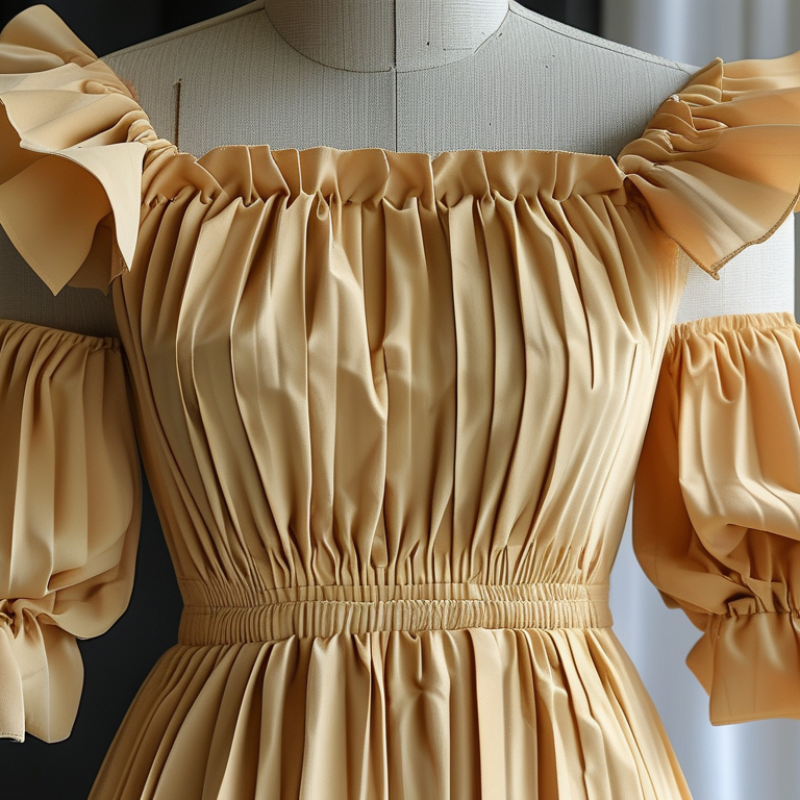
Pleated sleeves add movement, volume, and a more considered shape to wholesale apparel. Common styles include knife pleats, box pleats, accordion pleats, and sunray pleats. Knife pleats face one direction and create a clean, tailored line. Box pleats open from a central fold, giving sleeves a firmer silhouette. Accordion pleats feel lighter and more flexible. Sunray pleats usually spread from a narrow point and widen toward the cuff.
The sleeve structure depends on pleat depth, spacing, direction, and fabric weight. A two-centimeter pleat does not behave like a five-centimeter pleat. Lightweight woven fabric may need careful pressing or narrow seam control. Heavier fabric can hold shape, but it may increase bulk at the armhole. In wholesale terminology, buyers should confirm the pleat pitch, fold intake, finished sleeve width, cuff opening, and tolerance. A clear tech pack should show these measurements with a flat sketch.
During sampling, inspect whether the pleats open evenly after movement and washing. Check the armhole for pulling, especially when the sleeve has dense pleats. The first sample is rarely perfect. Small errors can change the whole appearance. A practical buyer also compares fabric recovery, pressing durability, and production consistency across sizes. Some suppliers describe “accordion” and “fine pleat” differently, so written measurements matter more than style names. This detail is easy to miss.
The 10 Best Pleat Sleeve Styles for Different Retail Segments
10 Best Pleat Sleeve Styles for Wholesale Buyers
The 10 Best Pleat Sleeve Styles for Different Retail Segments
Pleated sleeves add movement, structure, and a visible value cue. Grand View Research valued the global apparel market at approximately $1.79 trillion in 2023. That scale rewards adaptable designs, not isolated runway ideas. For premium boutiques, choose accordion, sunray, and crystal pleats. Their fine folds suit satin blouses, evening dresses, and lightweight knitwear. Contemporary womenswear shops can test knife, inverted, and godet pleats. These shapes create sharper shoulders without excessive fabric use.
Mass-market retailers may prefer box, cartridge, and micro pleats. They are easier to grade across sizes and work well in cotton shirts, denim tops, and modest daywear. For occasion-focused stores, tiered and balloon pleated sleeves create stronger volume. They photograph well. They also need careful packing. McKinsey’s State of Fashion 2025 highlights continued consumer sensitivity to value, so wholesale teams should compare visual impact with production minutes and shipping volume.
From practical sampling, pleat memory matters more than a showroom sketch. Test three washes and two humidity conditions before confirming bulk orders. One mistake is assuming every pleat survives pressing. It does not. A 2-centimeter fold can disappear on soft rayon but remain crisp on polyester. Retailers should request graded samples, seam-strength checks, and sleeve measurements at each size. Trend reports guide selection, but local sell-through data should decide depth. Ten styles sound powerful. Ten styles may still be too many for a narrow customer profile.
2024 Fashion Growth Forecast: McKinsey’s 2–4% Global Market Estimate
10 Best Pleat Sleeve Styles for Wholesale Buyers
McKinsey’s 2024 estimate places global fashion market growth at 2–4%. This forecast suggests steady expansion, not unlimited demand. Wholesale buyers should therefore prioritize adaptable pleat sleeve designs. Styles must look distinctive while remaining practical for repeated production.
In wholesale sampling, knife pleats create clean lines on cotton poplin and lightweight twill. Accordion pleats add movement to soft polyester, especially in three-quarter sleeves. Box pleats offer structure for workwear shapes. Sunburst pleats suit evening blouses, but they require careful pressing and consistent spacing. Micropleats can reduce visual bulk, although they may increase production complexity.
The forecast is modest, yet useful. Buyers can test smaller quantities before committing to deeper inventory. A puff sleeve with controlled pleats may attract attention without excessive fabric use. Bishop sleeves provide volume, while fluted cuffs create a softer commercial option. Tiered pleats add drama, but they may not suit every market or climate.
Color testing matters too. Black, cream, muted blue, and earthy green often support broader selling opportunities. Still, past performance cannot guarantee future results. Customer preferences shift quickly, and supplier capacity may change. Requesting a physical sample remains essential. Check pleat recovery after washing, seam strength, cuff comfort, and packing behavior. A beautiful sample can fail when compressed in cartons. Wholesale decisions should balance trend appeal, measurable quality, and the honest limits of the forecast.
Compare Cost, MOQ, Lead Time, Margin, and Sell-Through Potential
10 Best Pleat Sleeve Styles for Wholesale Buyers
Pleated sleeves can lift a basic blouse, but each style changes cost, MOQ, lead time, margin, and sell-through. Balloon, bishop, accordion, tulip, puff, lantern, tiered, folded cuff, origami, and knife-pleat sleeves need different construction work. Simple knife pleats usually cost less than layered balloon sleeves. Ask for a sample quote, fabric consumption, and sewing minutes.
For a first order, compare landed cost against realistic retail pricing. A $12 garment with a $32 retail price gives a 62.5% gross margin before freight, duties, returns, and markdowns. Small factories may accept 100–300 pieces, while complex sleeves often require 500–1,000 pieces. Lead time can move from 25 days to 50 days when pleat pressing needs special handling. My early costing missed pressing loss. That mistake reduced the expected margin.
McKinsey and The Business of Fashion projected low single-digit fashion growth in 2024, making stock discipline important. Avoid ordering ten styles equally. Test two dramatic sleeves and two easier commercial shapes. The 2024 NRF and Happy Returns report estimated $890 billion in U.S. retail returns. Pleat volume, armhole comfort, and recovery after washing can affect returns sharply. Measure sell-through weekly, not emotionally. A 70% sell-through in four weeks is stronger than a 90% forecast on paper. Ask suppliers for wash-test photos, size-graded samples, MOQ flexibility, and a written lead-time buffer. Small details matter.
Wholesale Quality Checks: AQL 2.5, ASTM D3776, and ISO 8559 Standards
For wholesale pleat sleeve styles, quality starts before cartons are sealed. AQL 2.5 provides a practical sampling framework for production inspection. It does not mean 2.5% of garments may contain defects. Inspectors define acceptable and unacceptable defect levels, then apply the agreed sample plan. Sleeve pleats should be checked for uneven spacing, loose threads, fabric pulls, and distorted cuffs. A crooked pleat can change the entire silhouette.
ASTM D3776 helps verify fabric mass per unit area. Weighing samples from different fabric sections can reveal inconsistent density. That matters because lighter fabric may collapse, while heavier fabric can make pleats look stiff. ISO 8559 supports reliable body and garment measurements. Buyers should compare sleeve length, cuff opening, armhole depth, and finished chest measurements with the approved size chart. Measurements need consistent tools and methods. Small differences can become costly across thousands of pieces.
Tips: Request a pre-production sample with the final pleat construction. Photograph critical points during inspection. Keep fabric swatches with the inspection report. No checklist is flawless. I have seen acceptable measurements hide poor pleat recovery after pressing. Add a wear test, especially for folded sleeves and elastic cuffs. Record both passing results and uncertain findings; these notes often improve the next order.
10 Best Pleat Sleeve Styles for Wholesale Buyers
Wholesale Quality Checks: AQL 2.5, ASTM D3776, and ISO 8559 Standards
Chart reference: The values represent common visible pleat-count references used when developing sleeve patterns. Actual pleat numbers may vary according to sleeve width, fabric weight, pattern volume, and the buyer’s technical specification.
Quality control: AQL 2.5 is used for lot-based acceptance sampling, with sample size and acceptance numbers determined by lot size and inspection level. ASTM D3776 is used to determine fabric mass per unit area, commonly reported as GSM. ISO 8559 provides standardized terminology and methods for body and garment measurements.